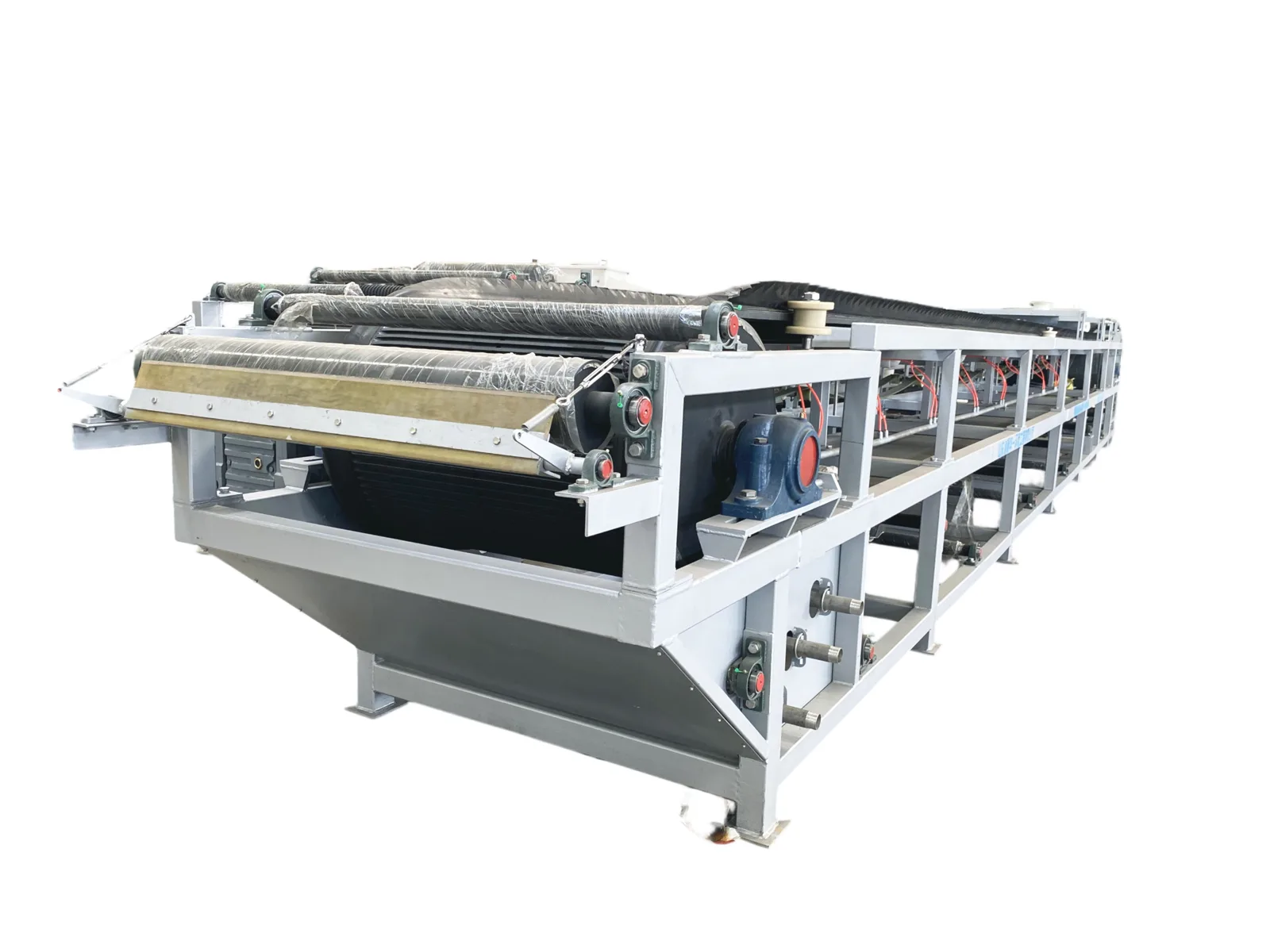
CXDU vacuum belt filter.
A continuous vacuum filter: the solids form a cake on a moving filter cloth, the filtrate is drawn through it by vacuum, and the cake is washed and dewatered before discharge.
What a vacuum belt filter is, and what the site still does
A vacuum belt filter works continuously on a moving filter cloth. The slurry is fed onto the cloth at one end and the filtrate is drawn through it by the vacuum boxes underneath, so the solids build up into a cake that stays on the belt; because the cake is carried along the belt, water can be sprayed onto it to displace the liquor still held in it, and the vacuum then draws the wash water through as well. The cake is discharged when the cloth turns over the roller at the end of the run, and the arrangement suits a continuous flow of fine slurry where the solids have to be washed as well as dewatered. The filter is assembled and tested at our factory before shipment, and the vacuum pump, filtrate separator and pipework are supplied with it where the offer includes them; on site the foundation, the feed and discharge pipework, the power and wash-water supply, and the lifting are site work.
Vacuum system and filtrate: what to check first when the vacuum drops
The vacuum pump, the filtrate separator and the pipework are sized with the machine as one system. The vacuum boxes under the cloth draw the filtrate through the cake, and the seal between the moving belt and the vacuum box holds the vacuum. Wear or damage on the sealing surfaces lets air in, and the vacuum reading drops before the cake shows it (claim SD-VB-VACUUM-01).
When the vacuum falls, check the belt-to-box seal, then the pipework and separator for air leaks, then the cloth (claim SD-VB-VACUUM-02).
Cake washing, wash water and where the wash liquor goes
Where the machine is configured with a wash zone, water is sprayed onto the cake to displace the liquor still held in it, and the vacuum draws the wash water through as well. The sprays have to wet the cake across its width, and the wash liquor has to pass through the cake rather than run along cracks. Blocked or misaligned nozzles show up as unwashed bands in the discharged cake (claim SD-VB-WASH-01).
The wash water and the filtrate leave the machine as process streams, not clean water, and are routed to the head of the works or to treatment. Where the machine has no wash zone, the cake is dewatered only (claim SD-VB-WASH-02).
Capacity, cake thickness, belt speed and vacuum time
Belt width and filter area bound the size of the unit, but neither fixes the duty. The flow the unit takes and the residual moisture the cake reaches follow the feed properties, the loading rate, the belt speed, the cake thickness, the vacuum level and the time the cake spends under vacuum. The 1–25 m² filter area and the 630–1700 mm belt of the CXDU range are catalogue bounds, not a throughput guarantee (claims SD-VB-CAP-01 and SD-VB-MODEL-01).
Feed distribution, cake thickness, belt speed and vacuum are set together at commissioning (claim SD-VB-SETUP-01).
Cloth blinding, washing and cloth life
The filter cloth is washed on its return run so it reaches the feed zone clean. Fines that lodge in the cloth blind it over time: the filtrate rate falls and the cake stays wetter at the same settings. Cloth life depends on the sludge, the wash pressure and the cleaning, so we do not publish a fixed replacement interval (claim SD-VB-CLOTH-01).
The wash sprays, their pressure and the cloth condition are routine inspection items; replacement cloth is in the spare-parts list (claim SD-VB-SPARES-01).
A vacuum belt filter is not a rotary vacuum filter
This is a continuous vacuum belt filter: the filter cloth is a flat belt that runs over vacuum boxes and discharges the cake when it turns over the end roller. A rotary vacuum filter uses a drum with the cloth on its surface and a valve that switches vacuum and blow-back as the drum turns. The two are different machines with different maintenance and different cake-washing arrangements. This page is about the belt machine; a rotary vacuum filter is a separate choice (claim SD-VB-NOTROTARY-01).
Choose the belt machine where the cake has to be washed over a length of belt and where the cloth can be washed and inspected on the return run (claim SD-VB-CHOICE-01).
What is in our supply, and what stays on site
In our supply sits the vacuum belt filter with the filter cloth, the vacuum boxes, the drive and the discharge roller, and with the vacuum pump, filtrate separator and pipework where the offer includes them. Site work is the foundation, the feed and discharge pipework, the power and wash-water supply, and the lifting (claim SD-VB-SUPPLY-01).
- In our supply — the filter, the cloth, the vacuum boxes, the drive and the discharge roller, plus the vacuum pump, separator and pipework where listed.
- Site work — foundation, feed and discharge pipework, power and wash-water supply, and lifting.
- Confirmed per order — the model, belt width, filter area, layout drawing, vacuum-system schedule and transport envelope.
Acceptance is written into the contract: factory acceptance tests before shipment, site acceptance tests after installation, and a performance test on the dry-solids content of the cake and the solids carried in the filtrate at the design feed, with the sampling point, the sample handling, the dry-solids method, the filtrate-solids method, the feed solids and the vacuum level at the test agreed for the project, the party that carries a missed result named, and a failed result rectified and retested as agreed. Acceptance records are project documents; when you compare quotations, ask for the acceptance section of the contract (claim SD-VB-ACCEPT-01).
What the figures on this page are, and what a test has to prove
The 10 model rows, the 630–1700 mm belt width, the 1–25 m² filter area and the 3–11 kW drive come from the factory CXDU datasheet. They are catalogue references, not a first-party test on your slurry. The operating checks in the engineering section describe the same machine; they are not a second set of performance data (claims SD-VB-MODEL-01 and SD-VB-EVIDENCE-01).
The sludge dewatering hub explains the family choice, and the machine comparison article sets out the four families side by side. The sludge drying beds comparison and the tank volume and HRT chart cover the alternative and the upstream duty.
CXDU vacuum belt filter — model range
The range runs from a 630 mm to a 1700 mm belt, with filter areas of 1 to 25 m² and motors from 3 to 11 kW. Belt width and filter area bound the size of the unit, but neither fixes the duty on its own: the flow the unit takes and the residual moisture the cake reaches follow the feed properties and the loading rate, the belt speed, the cake thickness, the vacuum level and the time the cake spends under vacuum, and they are confirmed against the slurry in hand during sizing. The frame carries the filter cloth, the vacuum boxes below it and the discharge roller at the end of the run.
| Model | Belt width (mm) | Filter area (m²) | Drive motor (kW) | Outline L × W × H (m) |
|---|---|---|---|---|
| CXDU1-630 | 630 | 1 | 3 | 5.7 × 0.98 × 1.5 |
| CXDU2-630 | 630 | 2 | 4 | 7.7 × 0.98 × 1.5 |
| CXDU3-630 | 630 | 3 | 4 | 8.7 × 1.08 × 1.5 |
| CXDU4-800 | 800 | 4 | 4 | 8.7 × 1.28 × 1.5 |
| CXDU5-800 | 800 | 5 | 4.5 | 10.7 × 1.28 × 1.5 |
| CXDU6-1000 | 1000 | 6 | 5.5 | 11.2 × 1.48 × 1.5 |
| CXDU10-1000 | 1000 | 10 | 5.5 | 13.7 × 1.48 × 1.5 |
| CXDU15-1200 | 1200 | 15 | 5.5 | 16.7 × 1.6 × 1.5 |
| CXDU20-1700 | 1700 | 20 | 7.5 | 15.7 × 2.2 × 1.5 |
| CXDU25-1700 | 1700 | 25 | 11 | 17.1 × 2.2 × 1.5 |
Confirmed against the factory CXDU datasheet.
Structure, operating checks and maintenance
What the machine is built around, and the routine checks that keep the vacuum doing its work. The vacuum belt route is chosen only after the slurry, the target cake and any washing duty have been confirmed for vacuum filtration; these operating checks support that duty, not a universal throughput or residual-moisture guarantee.
Vacuum formation and sealing
The vacuum boxes under the cloth draw the filtrate through the cake, and the seal between the moving belt and the vacuum box is what holds the vacuum. Wear or damage on the sealing surfaces lets air in, and the vacuum reading drops before the cake shows it. The vacuum level and the condition of the sealing surfaces are the first things to check on a shift.
Feed distribution and cake thickness
The slurry has to spread evenly across the full width of the cloth. An uneven feed forms a cake of uneven thickness; the vacuum then pulls preferentially through the thin zones and the thick zones stay wet. Feed distribution and the cake thickness set-point are adjusted together when the unit is commissioned.
Cake cracking and channelling
A cake that cracks or channels as it dries lets air short-circuit through the openings: the vacuum over the rest of the cake falls, and dewatering slows. Cracking is managed through the feed conditioning, the cake thickness and the belt speed rather than by asking more of the vacuum.
Wash zone sprays and liquor path
Where the machine is configured with a wash zone, the sprays have to wet the cake evenly across its width, and the wash liquor has to pass through the cake rather than run along cracks or surface channels. Blocked or misaligned nozzles show up as unwashed bands in the discharged cake, and the wash sprays are checked against that.
Cloth washing and blinding
The cloth is washed on its return run so it reaches the feed zone clean. Fines that lodge in the cloth blind it over time: the filtrate rate falls and the cake stays wetter at the same settings. The wash sprays, their pressure and the condition of the cloth are routine inspection items.
Vacuum system and the maintenance boundary
The vacuum pump, the filtrate separator and the pipework are sized with the machine and checked for air leaks as one system. Routine inspection and cleaning are planned as operator checks; work inside the vacuum pump and the drive follows the agreed maintenance plan and the site safety procedure.
Delivery
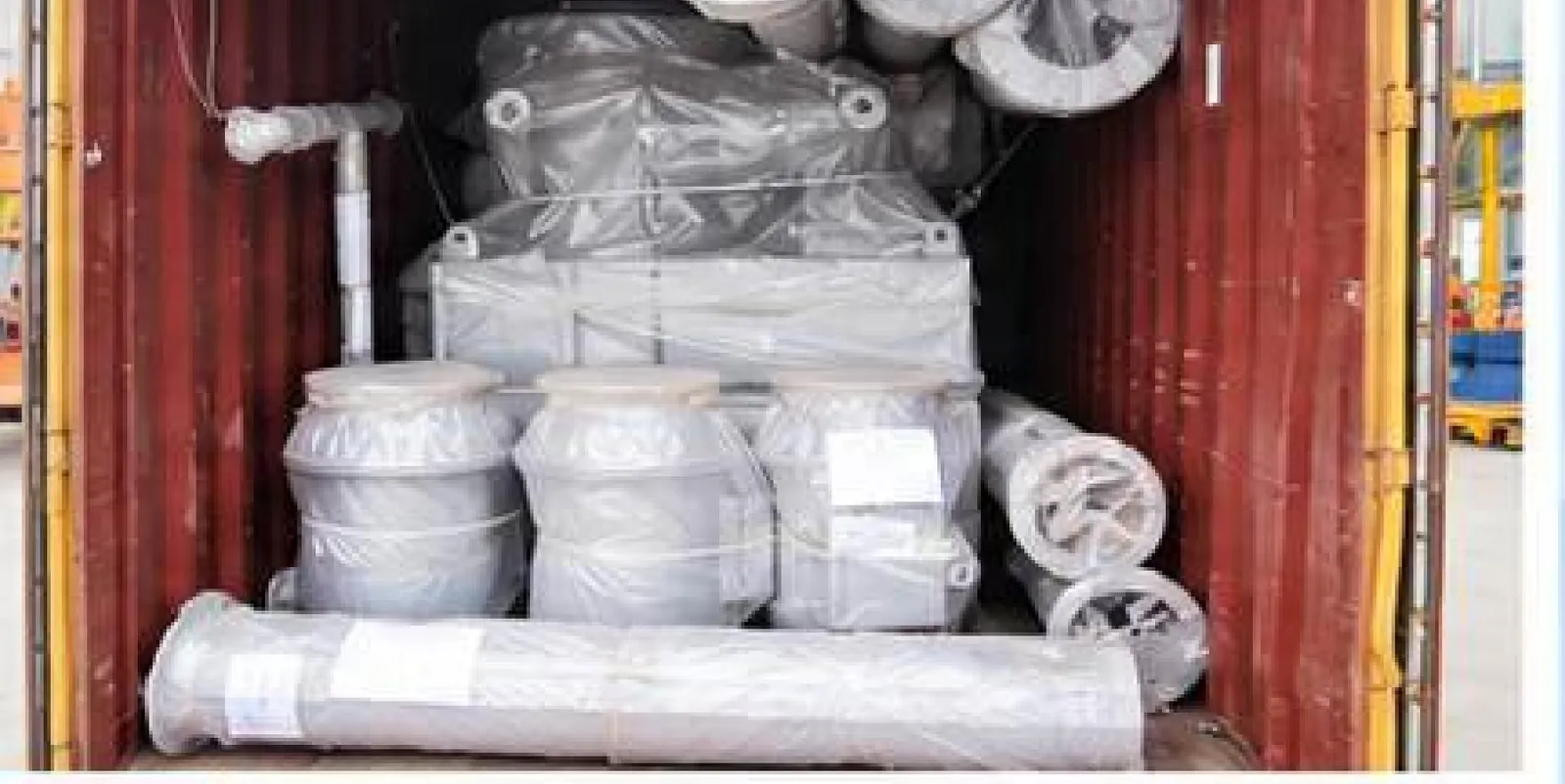
Units are assembled and tested at our factory before shipment, then shipped with export documentation. Loading arrangement and the delivery schedule are confirmed with each order against the packed dimensions and the port of discharge.