
Containerized wastewater treatment for Indonesian projects.
Pre-assembled plants for community, island, industrial-estate and processing sites across the archipelago — shipped in standard ISO containers and commissioned on site.
Send the design flow, the influent analysis, the receiving water or reuse target and the site access.
Segments we serve
Municipal and community
Community systems for a defined population, aligned with DEWATS practice: screening, equalization, biological treatment and disinfection sized on population, peak flow and the discharge standard.
Island resorts and hotels
Resort and hotel sites with no central sewer: a packaged train in ISO containers, with MBR where reuse for irrigation or flushing is required and space is tight.
Food, beverage and textile processing
Process wastewater with a high organic load: screening, grease removal and equalization ahead of A/O, MBBR or MBR for food and beverage streams, with the biological stage sized on COD and BOD. Textile streams need a treatability and colour review before the biological stage is selected.
Palm oil processing
High-load process wastewater carrying solids and grease: pre-treatment with screening, an oil and grease trap and DAF where needed, before the biological stage is sized on the organic load.
Industrial estates
Estate-level or stand-alone treatment for manufacturing tenants: one or more container units linked on a common pad, with capacity added as tenants and flow grow.
Construction camps
Temporary sites that need treatment during construction and relocation afterwards: a container plant on a small pad, moved to the next site when the works finish.
Hospitals and clinics
On-site wastewater treatment where discharge quality matters and disinfection is part of the train: the plant is scoped around the ward load and the discharge or reuse route agreed with the site.
Regulatory context
Domestic wastewater is governed nationally by Permen LH No. 11/2025. The discharge or reuse route selects the table, and discharge to water media is further divided by daily domestic-wastewater volume. Industrial process wastewater follows its sector standard. Reuse and infiltration have their own limits, so the intended application has to be fixed before the process chain and disinfection step are selected.
Requirements vary by province and by receiving water body. Please confirm the current issuance applicable to your project with your local environmental office or your consultant.
Matching the process chain to the application
The rows below cover the duties we size most often in Indonesia. The final train is fixed once the flow, the influent analysis and the receiving water or reuse target are known.
Wide table: scroll sideways to see every column.
| Application | What sets the load | Pre-treatment | Core process | Reuse or sludge |
|---|---|---|---|---|
| Community and municipal | Population, peak flow and the regional by-law | Screening, equalization | A/O or MBBR; MBR where reuse is required | Disinfection; sludge dewatering |
| Island resorts and hotels | Peak occupancy and limited land | Screening, grease removal, equalization | MBR for a compact footprint | Disinfection for irrigation or flushing; sludge dewatering |
| Palm oil processing | High organic load with solids and grease | Screening, oil and grease trap, DAF where needed | Biological stage sized on the organic load | Land application only where permitted; sludge dewatering |
| Food and beverage processing | High COD and BOD, fats, oils and grease | Screening, grease removal, equalization | A/O, MBBR or MBR sized on the organic load | Reuse where permitted; sludge dewatering |
| Textile processing | Colour and treatability review before the biological stage | Screening, equalization, and a treatability and colour review | A/O, MBBR or MBR, selected after the treatability and colour review | Reuse only where the review shows the target can be met; sludge dewatering |
| Industrial estates | Several tenants and a growing flow | Per-stream pretreatment and equalization | Shared biological stage | Reuse or discharge; sludge dewatering |
| Construction camps | Temporary population and relocation | Screening and equalization in the container | A/O or MBBR | Disinfection; sludge handling by the operator |
A container unit is the transport format; the number of units follows the flow and the peak factor.
Published equipment ranges
These are the published ranges of the equipment families we build. They are not a selection; the unit count and the process train are confirmed against the project data.
Wide table: scroll sideways to see every column.
| Equipment | Published range | Format | Selection input |
|---|---|---|---|
| CXWSZ containerized sewage treatment | 0.5–10 m³/h per unit | ISO container or skid, 3 × 1.5 × 2 m to 16 × 3 × 3.5 m | Design flow and peak factor |
| CXMBR integrated MBR | 0.5–10 m³/h per unit | Packaged unit, 3.5 × 1.5 × 2 m to 15 × 2.5 × 2.5 m | Effluent quality and reuse target |
| CXCF and CXPF dissolved air flotation | 5–80 m³/h (CXCF); 4–300 m³/h (CXPF) | Tank unit with saturator | Oil, grease and suspended solids load |
| CXDL screw press dewatering | 6–480 kgDS/h | Skid-mounted press | Sludge volume and target cake |
Ranges are reproduced from the published model tables; dimensions and the final configuration are confirmed against the actual build.
Equipment for an Indonesian project
The four families below cover community, resort, estate and processing duties. Each card opens the product page with the model table.
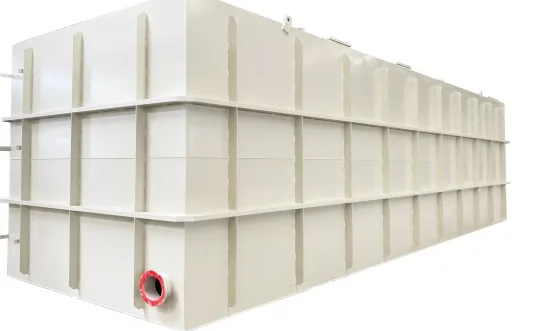
Containerized sewage treatment plant
A complete train in ISO containers, delivered by sea, barge and road to the project island.
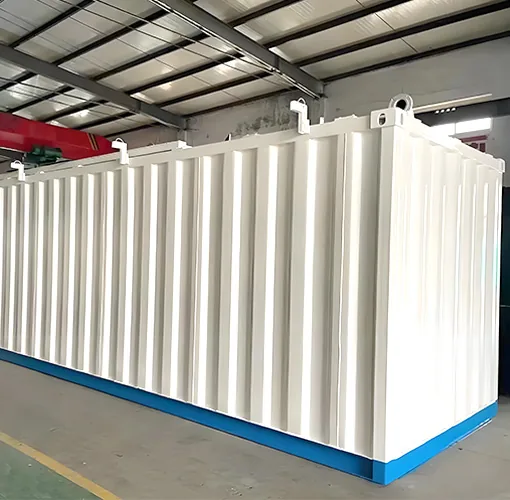
Integrated MBR equipment
Biological treatment and membrane separation in one unit, where reuse or a small footprint sets the design.
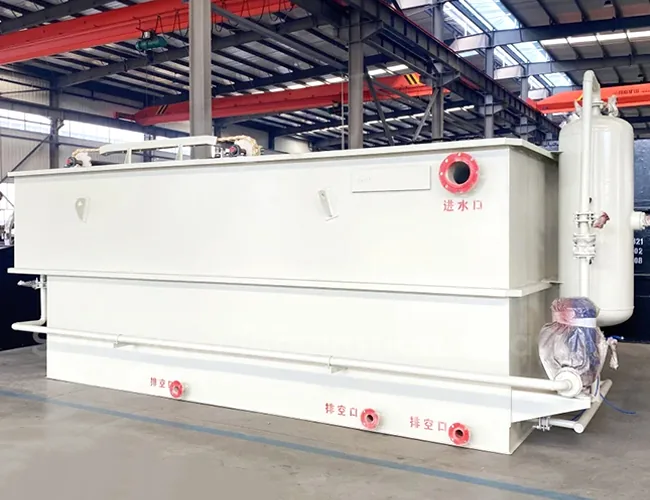
Dissolved air flotation
Micro-bubble flotation ahead of the biological stage for palm oil, food and textile loads carrying grease and solids.
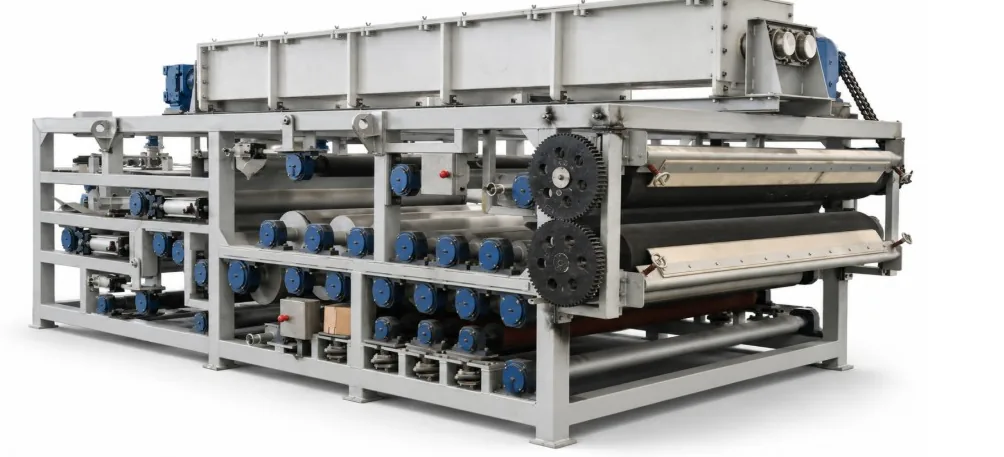
Sludge dewatering equipment
Screw press, belt press and plate-and-frame units that turn the sludge into a transportable cake.
Why containerized fits Indonesia
Archipelago logistics
Standard ISO containers move by sea to the major ports, then by road or barge to the project island. The deciding factors are the largest unit size and the lifting capacity at the discharge point.
Land constraints
A container plant needs only a small level concrete pad, which suits a resort, estate or urban site where land is scarce, already developed or has no room for a civil works programme.
Fast deployment
The plant is assembled, piped, wired and tested at the works before shipment, so on-site work is limited to the foundation, the inlet and outlet connections, power, water and commissioning.
Relocatable and expandable
A plant can be lifted onto a truck and moved to another site when a camp closes or a lease ends, and capacity is extended by adding container units as the service area grows.
One package for the whole site
Where a site has no municipal network, treatment, sludge dewatering and water supply can be scoped together, so the interfaces between them are fixed in one place rather than on site.
What is included, what is confirmed, what stays with the buyer
The split below is the same for every project; the exact list is fixed in the quotation and the contract.
Included in our supply
- Treatment train assembled, piped, wired and tested at our factory
- Container or modular enclosure, internals and access points
- Blowers, transfer pumps, dosing sets and the control cabinet
- Drawings, operating manuals and the P&ID, with the final list fixed in the quotation
- Packing list and certificates for export and customs
Confirmed with the quotation
- Design flow, influent analysis and the receiving water or reuse target
- Number of units, footprint and the outline drawing
- Power supply: voltage, frequency, phases, grid or generator
- Ambient and water temperature range at the site
- Site access: port, barge, road and lifting at each transfer point
- Shipping terms, port of discharge and the delivery schedule
By the buyer on site
- Level foundation or pad, civil works and drainage
- Inlet and outlet connections to the site network
- Power supply, earthing, water supply and compressed air where required
- Barge, road transport and lifting at each transfer point
- Operating permits and the discharge or reuse permit
- Day-to-day operation, chemicals and sludge disposal
We do not issue permits and we do not guarantee compliance; the permit conditions are confirmed with the authority for the site.
Technical documents and project steps
The sequence below is how a project is fixed from enquiry to commissioning support. Durations are not stated here because they depend on the unit count, the shipping route and the barge or road access. The final document list is fixed with the order and the quotation.
Documents issued with the equipment
- Process description and equipment list for the agreed train
- General arrangement and outline drawings
- P&ID and electrical drawings
- Operation and maintenance manual
- Packing list, certificates and export documents
Project steps
- Enquiry: flow, influent analysis, receiving water or reuse target and site access
- Sizing: process train, unit count and outline drawing
- Quotation: scope split, documents and commercial terms
- Manufacturing: assembly, piping, wiring and factory testing
- Packing and shipping: export packing, loading, sea freight and documents
- Site support: foundation and connection review, then commissioning support
What to send us
- Location, province and the receiving water body
- Design flow (m³/day) and peak flow factor
- Influent quality: COD, BOD, TSS, oil and grease, pH
- Discharge standard or reuse target (irrigation, landscaping, flushing)
- Power supply: voltage, frequency, phase, grid or generator
- Site access and unloading: road route, barge, crane or forklift capacity
- Ambient temperature range and water temperature
- Project stage (feasibility, design, tender or construction)
What moves the budget
The quotation follows the process train and the scope split, not a catalogue price. The factors below are the ones that move it most.
- Design flow and peak factor, which set the number of units
- Influent load: COD, BOD, TSS, oil and grease, and pH
- Discharge or reuse target, which sets membrane and disinfection scope
- Pre-treatment for palm oil, food or textile streams
- Power supply and the degree of automation
- Sea freight, barge or road transfer and the lifting at each point
- Ambient temperature and the enclosure specification
- Import duties, taxes and local charges, which are not part of the equipment price unless stated
Send the project data and we will size the train
A flow, an influent analysis and the site access are enough to start.
Go to the inquiry formQuestions we get from Indonesia projects
How much wastewater can one unit treat?
The published CXWSZ specification table gives 0.5–10 m³/h per unit. The CXWSZ-20 model row separately lists 20 m³/h and 2 units. Larger flows are met by running several units in parallel or by a custom build. The footprint runs from 3 × 1.5 × 2 m to 16 × 3 × 3.5 m depending on capacity. Send the design flow and peak factor and we will confirm the unit count and configuration.
What power supply does the plant need?
Send the voltage, frequency and number of phases, and say whether the supply is a grid or a generator. Frequency is fixed when the equipment is built: a transformer changes voltage only and cannot change frequency. Where a motor has to run on a different frequency, a variable frequency drive lets it see the frequency it was designed for.
Can you deliver to an island site?
Yes. Units travel in standard ISO containers by sea, then by barge or road to the site. The deciding factors are the size of the largest unit, up to 16 × 3 × 3.5 m, and the lifting capacity at the discharge point. A standard dry container has an internal width of 2.352 m, so an assembled unit wider than that needs another shipping route, agreed before the offer.
Do you use dissolved air flotation for palm oil wastewater?
Where the stream carries oil, grease and suspended solids, dissolved air flotation is placed ahead of the biological stage. The unit is sized on the measured oil and grease load and the flow, and the biological stage is then sized on the remaining organic load. The final train is fixed after the influent analysis.
What discharge or reuse standard can the plant meet?
The plant is designed to the standard you specify. The applicable limits depend on the receiving water body, the discharge volume and the regional by-law, and are confirmed by your environmental office or consultant; we do not issue permits. If the water is to be reused for irrigation, landscaping or flushing, say so early, because the reuse target changes the process chain.
What do you need to prepare a quotation?
Location and receiving water; design flow and peak factor; influent COD, BOD, TSS, oil and grease and pH; the discharge standard or reuse target; voltage, frequency, phase and whether the supply is a grid or generator; site access and lifting capacity; ambient temperature range; and the project stage. With those we can size the train and the number of units.