
CXDL screw press dehydrator.
A low-speed screw press that dewaters sludge continuously: the screw conveys and compresses the sludge against a self-cleaning cylinder, with low power draw and low demand for wash water.
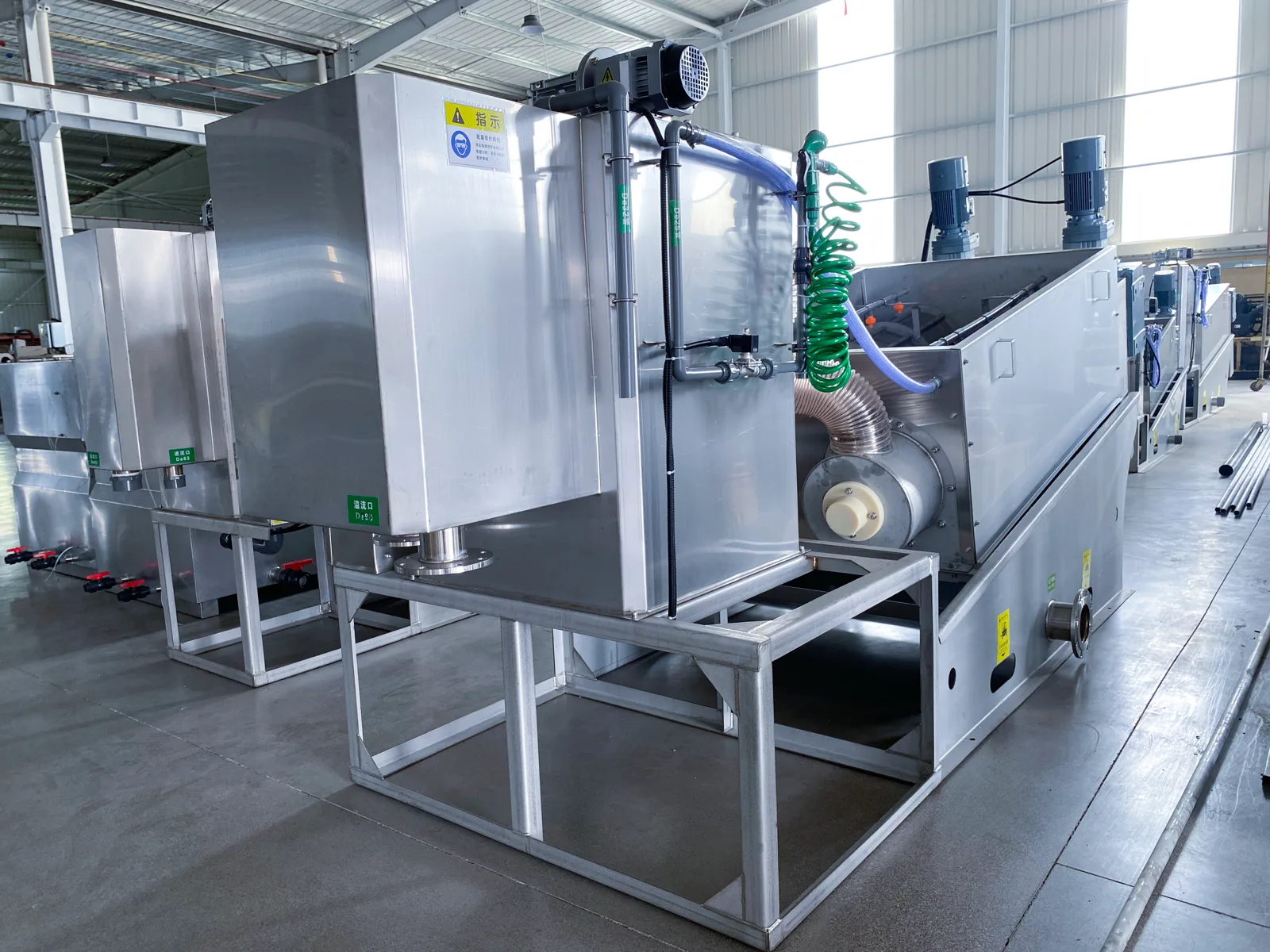
What a screw press is, and what the site still does
A screw press dewaters sludge with a slowly rotating screw inside a cylinder. The screw conveys the sludge forward, and the passage between the screw flights and the cylinder narrows along the way, so the sludge is compressed and the water is pressed out through the gaps between the rings; the slow rotation and the self-clearing ring gaps keep the passage open, and the press draws little power and needs little wash water. Sludge is thickened and dewatered in one continuous pass, so the unit suits a duty that runs for most of the day with little operator attention. The press is assembled and tested at our factory before shipment, and the ancillary equipment named in the offer is mounted, piped and wired on the skid with it; on site the foundation and anchorage, the feed and discharge pipework to our flanges, the power and water supply, and the lifting are site work.
Dry-solids throughput and cake dryness on a screw press
The CXDL table publishes 6–480 kgDS/h across 14 models, from the CXDL-101 at 6 kgDS/h to the CXDL-404/L at 320–480 kgDS/h. That figure is a dry-solids throughput for a reference sludge, not a volume of wet sludge, and it is confirmed against your sludge during sizing (claims SD-SP-CAP-01 and SD-SP-MODEL-01).
Cake dryness and throughput move together. A slower screw and a tighter ring gap give a drier cake at a lower throughput; a faster screw gives more throughput at a wetter cake. The catalogue does not publish a cake-dryness range for the family, so this page does not state one; the target cake is fixed by a test on your sludge (claim SD-SP-CAKE-01).
The 6–480 kgDS/h band is a model range, not a promise
State the feed solids and the target cake when you ask for a model. The table is built on a reference sludge and confirmed on yours at sizing.
Polymer, wash water and the running cost of a screw press
The screw press is chosen partly because its wash-water demand is low. The CXDL table publishes wash water per model from 16 to 99 L/h, and total power from 0.60 to 3.70 kW. Those are catalogue values for the reference duty (claims SD-SP-WASH-01 and SD-SP-POWER-01).
Polymer is still needed to condition the sludge, and the dose is set by a test; we do not publish a single PAM figure for the family. The wash water and filtrate leave the machine together and return to the head of the works or the plant drain (claim SD-SP-PAM-01).
The sludge moisture and cost article sets out how the water left in the cake drives haulage and disposal cost.
Screw, ring and screen life, and what wear looks like
The screw flight, the rings and the screen gaps are the wear parts. The slow rotation and the self-cleaning ring gaps keep the passage open, but grit and fibre still wear the flight and the rings. A worn screw or a widened ring gap shows up as a wetter cake at the same settings. We do not publish a replacement interval, because it follows the sludge and the grit load (claim SD-SP-WEAR-01).
Routine checks are the ring gap, the screw flight, the screen condition and the drive. The replacement parts are listed in the manual (claim SD-SP-SPARES-01).
What unattended running means on a screw press, and what it does not
The CXDL catalogue states one-push-button start and stop and automatic shutdown. Unattended here has a defined boundary: the press does not need an operator standing at it during a steady run, but it still needs a planned operator round for polymer make-up, wash water, cake discharge and alarms, and a response to an abnormal feed. It does not mean an unmanned plant (claim SD-SP-UNATTENDED-01).
The alarm and shutdown logic — low polymer, high torque, no feed, drive fault — is fixed for the project and written into the control description at handover (claim SD-SP-ALARM-01).
What is in our supply, and what stays on site
In our supply sits the skid-mounted screw press with the sludge pump, the wash-water pump, the polymer dosing system and the control panel mounted, piped and wired, where the offer includes them. Site work is the foundation and anchorage, the feed and discharge pipework to our flanges, the power and water supply, and the lifting (claim SD-SP-SUPPLY-01).
- In our supply — the skid, the sludge pump, the wash-water pump, the polymer dosing system and the control panel named in the offer.
- Site work — foundation and anchorage, feed and discharge pipework to our flanges, power and water supply, and lifting.
- Confirmed per order — the model, the skid layout, the utility schedule and the transport envelope.
The selection and sizing guide takes the site conditions into the choice before the equipment is fixed.
Acceptance is written into the contract: factory acceptance tests before shipment, site acceptance tests after installation, and a performance test on the dry-solids content of the cake and the solids carried in the filtrate at the design feed, with the sampling point, the sample handling, the dry-solids method, the filtrate-solids method, the feed solids at the test and the polymer dose agreed for the project, the party that carries a missed result named, and a failed result rectified and retested as agreed. Acceptance records are project documents; when you compare quotations, ask for the acceptance section of the contract (claim SD-SP-ACCEPT-01).
What the figures on this page are, and what a test has to prove
The 14 model rows, the 6–480 kgDS/h range, the 16–99 L/h wash water and the dimensions come from our June 2026 CXDL catalogue. They are catalogue references for a reference sludge, not a first-party test on your sludge, and the final dimensions follow the actual build (claims SD-SP-MODEL-01 and SD-SP-CAP-01).
The sludge dewatering hub explains the family choice, and the sludge thickening article covers the upstream stage that changes the size of the press. The machine comparison article sets out the four families side by side.
Factory footage
CXDL screw press dewatering machine — model range
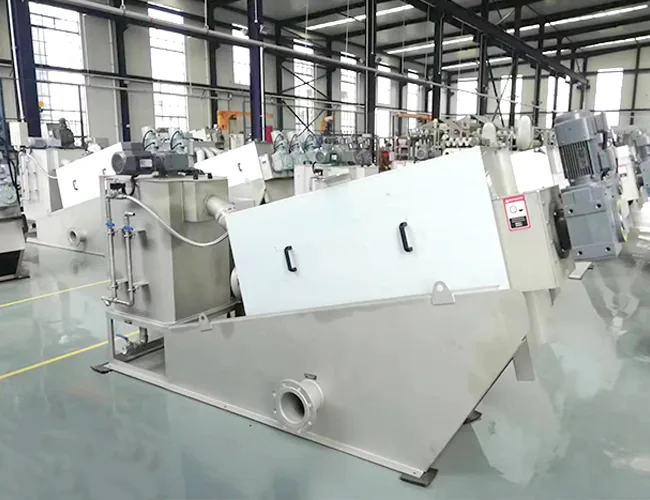
The press can be supplied with the equipment required for dewatering included and factory mounted, piped and wired on a single stainless steel skid: the sludge pump, the wash-water pump, the polymer dosing system and the control panel. Startup and shutdown run from one push button, and once started the press runs unattended and can be set to shut down on its own. The model is fixed against the sludge volume, the feed solids and the target cake during sizing.
| Model | Dry solids (kgDS/h) | Total power (kW) | Wash water (L/h) | Dimensions L × W × H (mm) |
|---|---|---|---|---|
| CXDL-101 | 6 | 0.60 | 16 | 1785 × 900 × 1821 |
| CXDL-102 | 12 | 0.70 | 32 | 1785 × 900 × 1821 |
| CXDL-103 | 18 | 1.00 | 48 | 1835 × 1100 × 1823 |
| CXDL-104 | 25 | 1.25 | 32 | 2065 × 1500 × 2015 |
| CXDL-105 | 30 | 1.35 | 48 | 2065 × 1500 × 2015 |
| CXDL-201 | 20 | 1.05 | 33 | 2621 × 1200 × 2029 |
| CXDL-202 | 40 | 1.25 | 66 | 2621 × 1200 × 2029 |
| CXDL-203 | 60 | 1.80 | 99 | 2621 × 1500 × 2029 |
| CXDL-204 | 80 | 2.70 | 66 | 2771 × 2100 × 2029 |
| CXDL-205 | 100 | 2.90 | 99 | 2771 × 2100 × 2029 |
| CXDL-401/L | 80–120 | 0.95 | 33 | 3767 × 1095 × 2005 |
| CXDL-402/L | 160–240 | 1.85 | 66 | 3970 × 1260 × 2058 |
| CXDL-403/L | 240–360 | 3.15 | 99 | 4214 × 1694 × 2158 |
| CXDL-404/L | 320–480 | 3.70 | 99 | 4542 × 2194 × 2200 |
Figures are from our June 2026 CXDL catalogue. Dry-solids throughput is stated for a reference sludge and is confirmed against your actual sludge during sizing; final dimensions follow the actual build.
The screw press range
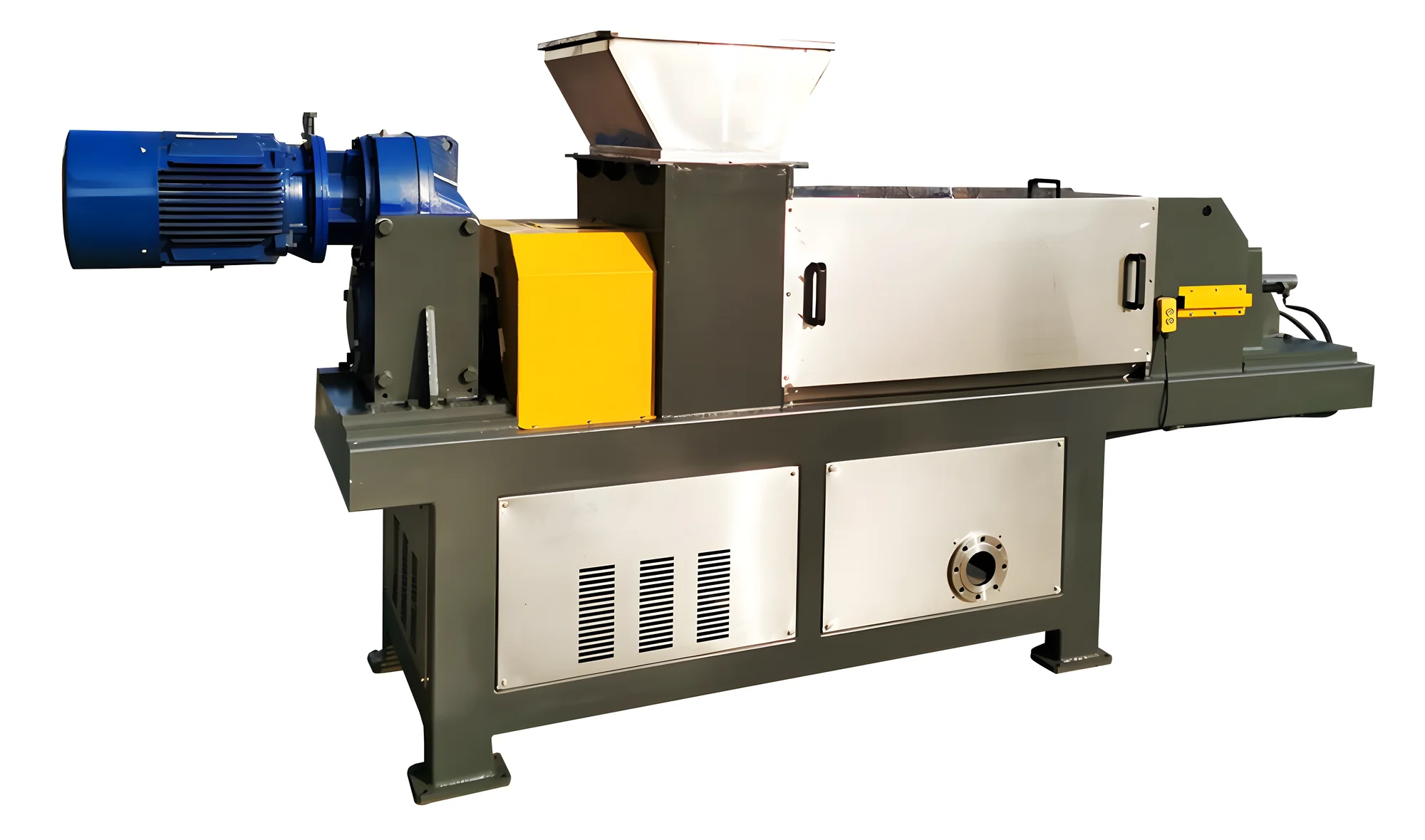
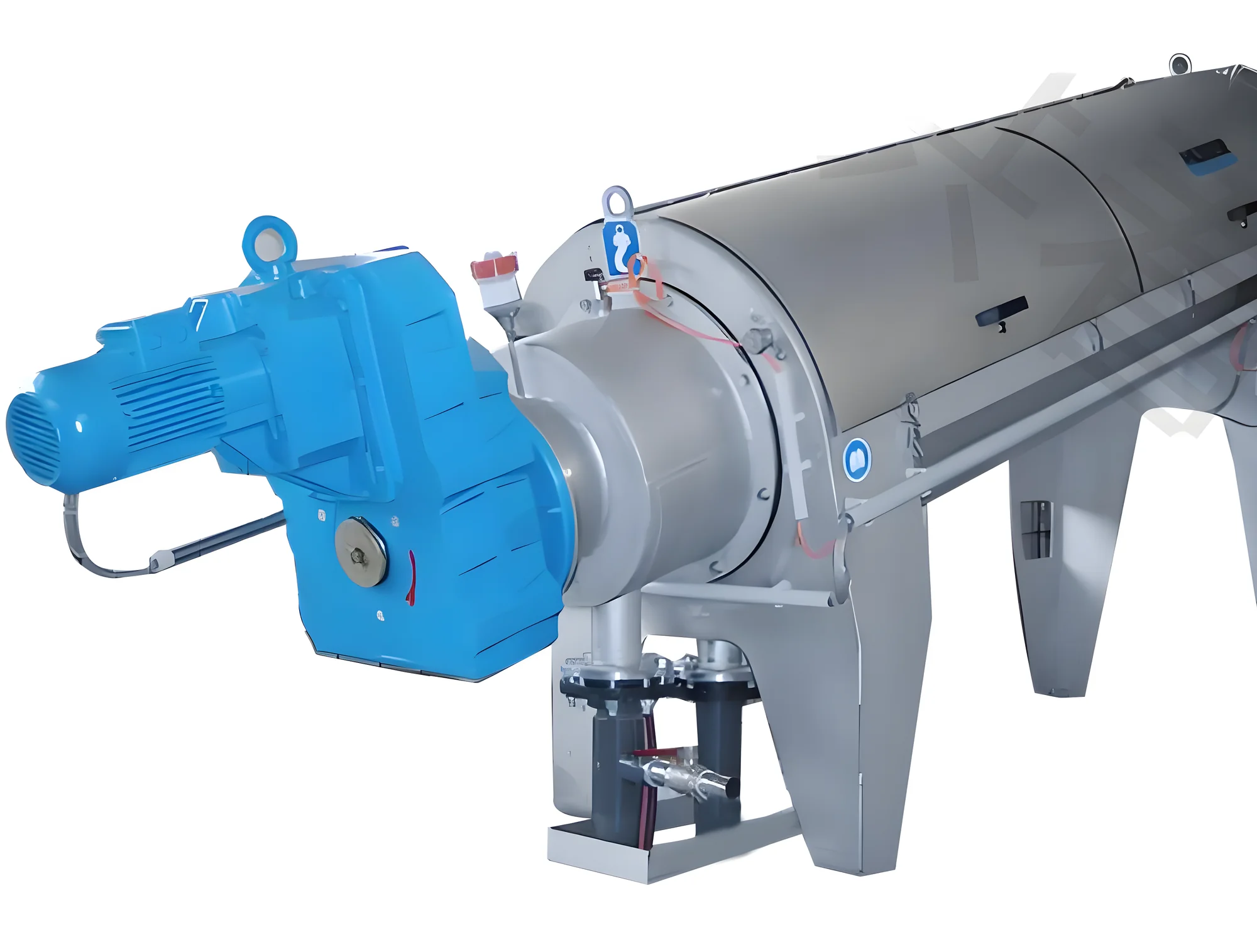
Delivery
Units are assembled and tested at our factory before shipment, then shipped with export documentation. Loading arrangement and the delivery schedule are confirmed with each order against the packed dimensions and the port of discharge.
Why sludge type belongs in the performance test
JSWA’s 2020 follow-up reports different results for its Type 2 screw press across three sludge categories.
| Sludge in the report | Cake-moisture difference (percentage points) | Observations (n) |
|---|---|---|
| Oxidation-ditch excess sludge | −2.08 | 6 |
| Mixed raw sludge | −4.96 | 16 |
| Anaerobically digested sludge | −3.94 | 8 |
Difference = test moisture minus the report’s performance criterion. Negative values mean lower moisture; these are neither absolute cake-moisture values nor CXDL test results.
For your sludge test, agree the feed solids, dry-solids throughput, cake moisture, solids recovery and polymer dose together.
Japan Sewage Works Agency · 2020 report · Figure 1, page 2