
Inclined tube settlers.
Inclined tube packs that give a clarifier a much larger settling area inside the same tank, so a clarification or tertiary settling duty is done in a smaller footprint.
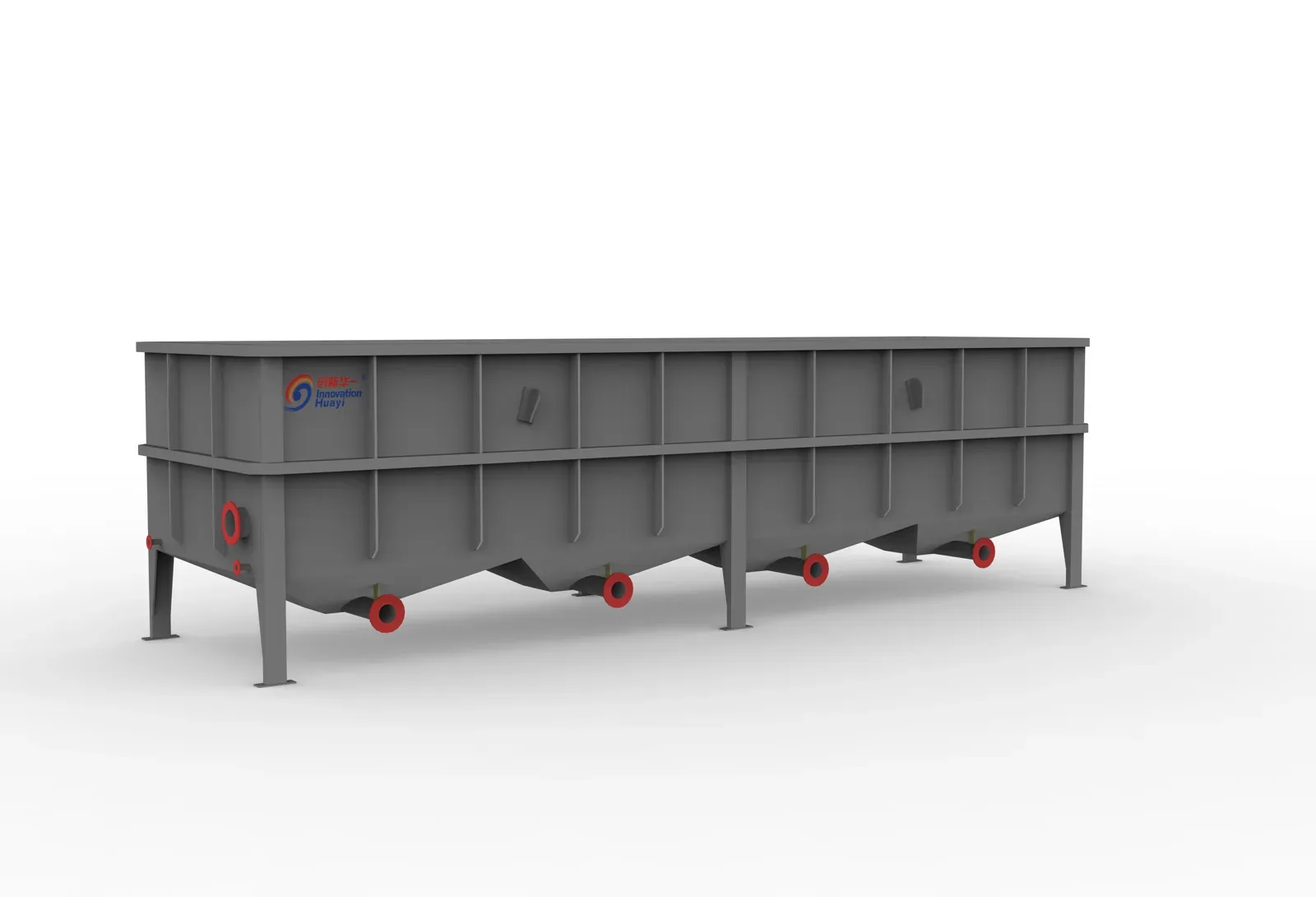
What an inclined tube or plate settler is, and what the site still does
An inclined tube or plate settler is a clarifier tank with packs of inclined tubes or plates inside it. Each tube is a short settling channel of its own, and together the packs give the tank an effective settling area several times its footprint, so the retention time is short and the unit stays small; the settled solids slide down the inclined surfaces into a hopper. The media is supplied as modules that drop into the tank and can be lifted out for cleaning or replacement. A new package unit is built and tested at our factory and installed on a prepared foundation; where the media goes into an existing basin, we supply the media and its support and the site supplies the tank, the connections and the lifting.
It suits a compact clarification or tertiary polishing stage: a new package unit, a basin with limited plan area, or an existing tank that has to settle more solids without a new concrete structure.
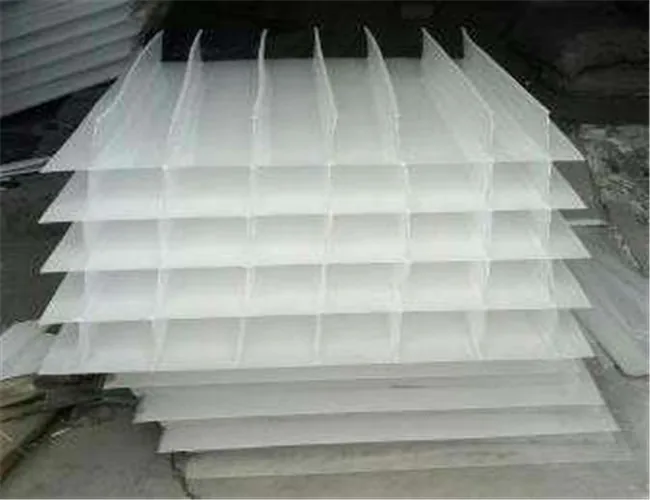
Tube and plate media: what is fixed and what is set at design
The media is the working part of the unit. Inclined tube packs and plate packs are supplied as modules that drop into the tank and can be lifted out for cleaning or replacement. Tube packs give a high settling area in a compact block; plate packs give a more open flow path where the solids load or the cleaning routine calls for it. The media material is chosen for the water being treated.
The media angle and spacing are set at design so that settled solids keep sliding down the surface instead of building up on it. The exact tube diameter, plate angle, spacing and module size are fixed on the order drawing against the solids and the tank, not taken from this page as a catalogue figure.
Media geometry is project-confirmed
Bring the solids type, the feed concentration and the tank dimensions to sizing; the order drawing then fixes the tube or plate size, the angle and the spacing.
Surface loading and effective settling area
Surface loading is the flow divided by the settling area. On the tank plan area the CXKG table gives about 2.7–3.4 m³/m²·h across the six published models. The media packs add effective settling area beyond the plan area, and that larger area is what the inclined settler is bought for; the plan-area figure is an overflow-rate check, not the media loading.
Worked through on CXKG-10: 10 m³/h over 2.5 × 1.5 = 3.75 m² is 2.67 m³/m²·h on the plan area. On CXKG-100: 100 m³/h over 12.0 × 2.5 = 30 m² is 3.33 m³/m²·h. The media area itself is set at design and is confirmed with the drawing.
The surface loading and hydraulic loading article sets out the unit and the assumptions, the tank volume and HRT chart covers the volume side of the same tank, and the tank volume and HRT calculator works it for a given flow.
Where an inclined settler is not the answer
A feed with high oil, high fibre or high grit needs a stage ahead of the settler. Flotation lifts oil and grease better than settling; screens take out rags and fibre; grit removal protects the media and the hopper. Very high suspended solids may need a primary stage or flotation before polishing, and a dissolved load belongs to biology or chemical treatment rather than to more plates. The unit is not a filter and not a substitute for the biological stage it polishes.
Short-circuiting is the other failure mode. Poor inlet distribution, an uneven outlet weir or a damaged media module can pass water through without giving it the settling path the design assumed. The dissolved air flotation and screens and filtration pages cover the stages that take those duties instead.
Sludge hopper and tank interface
The solids that settle on the inclined surfaces slide into a hopper at the bottom of the unit. The hopper, the draw-off connection and the sludge discharge are part of the clarification unit; the sludge concentration, the volume and the downstream dewatering are project data. The sludge dewatering range takes the sludge on to a handleable cake.
The tank interface is fixed with the unit: the inlet, the clarified-water outlet, the sludge draw-off and the access for lifting the media modules. Those connections are shown on the order drawing and are confirmed against the site pipework.
New tank or retrofit of an existing basin
Media can be added to an existing basin to raise its settling area without building a new tank. A retrofit needs a survey of the tank dimensions, the floor and hopper condition, the inlet and outlet arrangement, and the structural capacity for the media and the access. The boundary is the same as a new unit: we supply the media and its support, the site supplies the tank, the connections and the lifting.
A new package unit is built and tested as one item and installed on a prepared foundation. The selection and sizing guide takes the site conditions into the choice.
Acceptance is written into the contract: factory acceptance tests before shipment, site acceptance tests after installation, and a performance test on the suspended solids and turbidity of the clarified overflow at design load, with the sampling point, the test method and the receiving works' standard fixed for the project, the party that carries a missed result named, and a failed result rectified and retested as agreed. Acceptance records are project documents; when you compare quotations, ask for the acceptance section of the contract.
What the CXKG table is, and what is project-confirmed
The CXKG table on this page is the same six-model table as the sedimentation hub, reproduced from our 2026.6 catalogue. Dimensions and weights are approximate reference values and are confirmed against the actual build. The table is not a first-party performance test.
Media geometry, the achieved effluent and any project reference are confirmed for the duty. The sedimentation and clarification hub sets the family against the peripheral-drive scraper and the other separation stages.
CXKG inclined tube settler
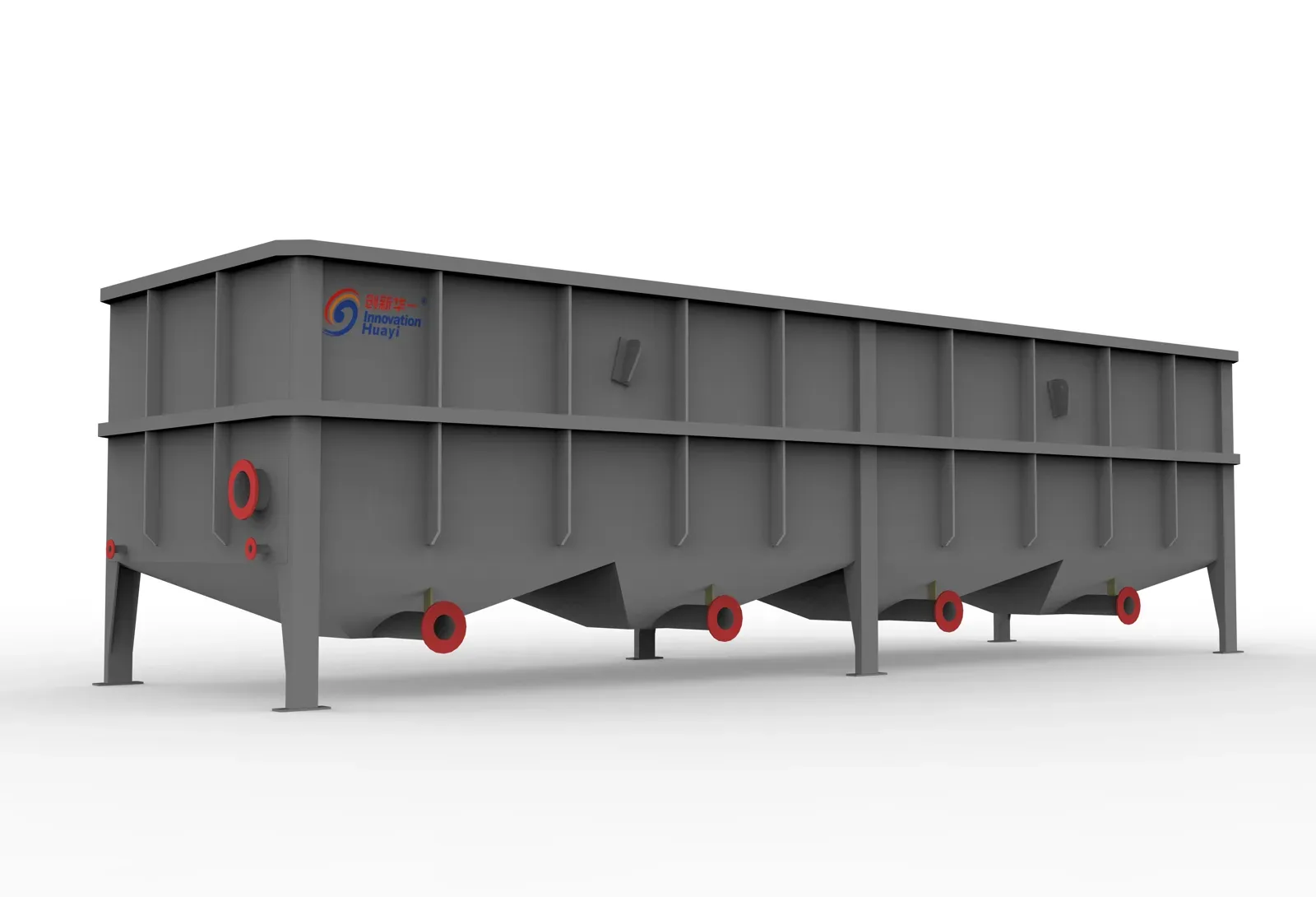
The CXKG range is a consolidated clarification unit: the tank, the inclined tube or plate packs, the hopper and the sludge discharge are built as one item and shipped as a unit. Raw water enters at the inlet and is distributed across the media; the solids settle onto the inclined surfaces and slide into the sludge hopper, while the clarified water is drawn off at the top. The plant can be used on its own as a clarification stage, or as the tertiary stage that polishes the effluent of a biological train before discharge. Tank material, media grade and the inlet arrangement are chosen against the water being treated and the site conditions.
| Model | Capacity (m³/h) | Volume (m³) | Dimensions L × W × H (mm) | Weight (t) |
|---|---|---|---|---|
| CXKG-10 | 10 | 7.5 | 2500 × 1500 × 2500 | 1 |
| CXKG-20 | 20 | 15 | 5000 × 1500 × 2500 | 2 |
| CXKG-40 | 40 | 30 | 6500 × 2000 × 2500 | 3.2 |
| CXKG-50 | 50 | 37.5 | 8000 × 2200 × 2500 | 4.5 |
| CXKG-80 | 80 | 60 | 9500 × 2500 × 2750 | 5.2 |
| CXKG-100 | 100 | 75 | 12000 × 2500 × 2750 | 6 |
This is the same six-model CXKG table as the sedimentation hub. Dimensions and weights are reference values reproduced from our 2026.6 catalogue and are approximate. Final dimensions and weights are confirmed against the site conditions and the actual build.
Tube and plate media
The settling media is the working part of the unit. Inclined tube packs are supplied in modules that drop into the tank and can be lifted out for cleaning or replacement; plate packs are used where a larger open flow area suits the solids load better. The incline angle is set so that settled solids keep moving down the surface instead of building up on it, and the media is made in a material chosen for the water being treated. Where an existing tank under-performs, media can be added to it to raise the settling area without building a new basin.