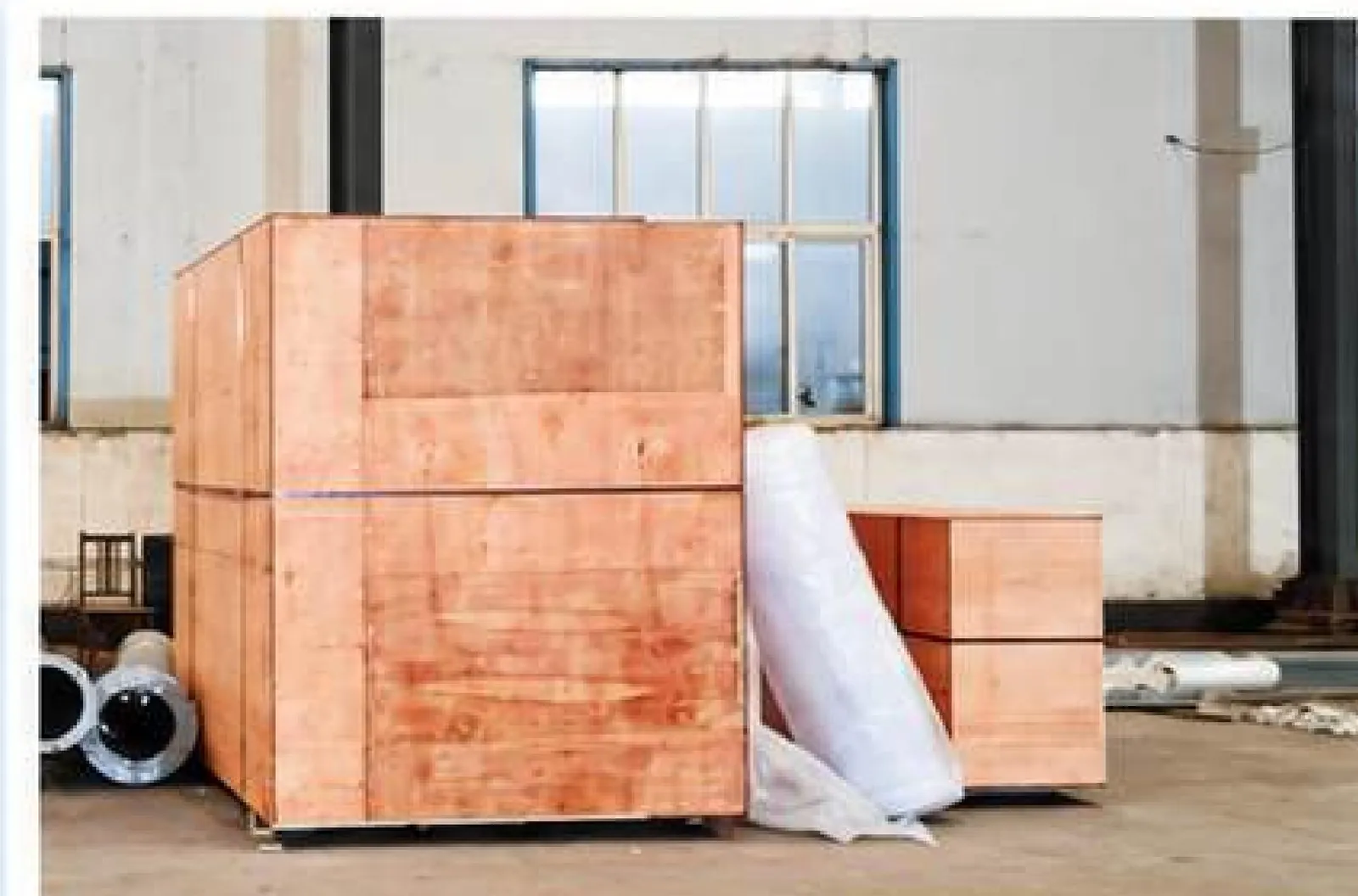
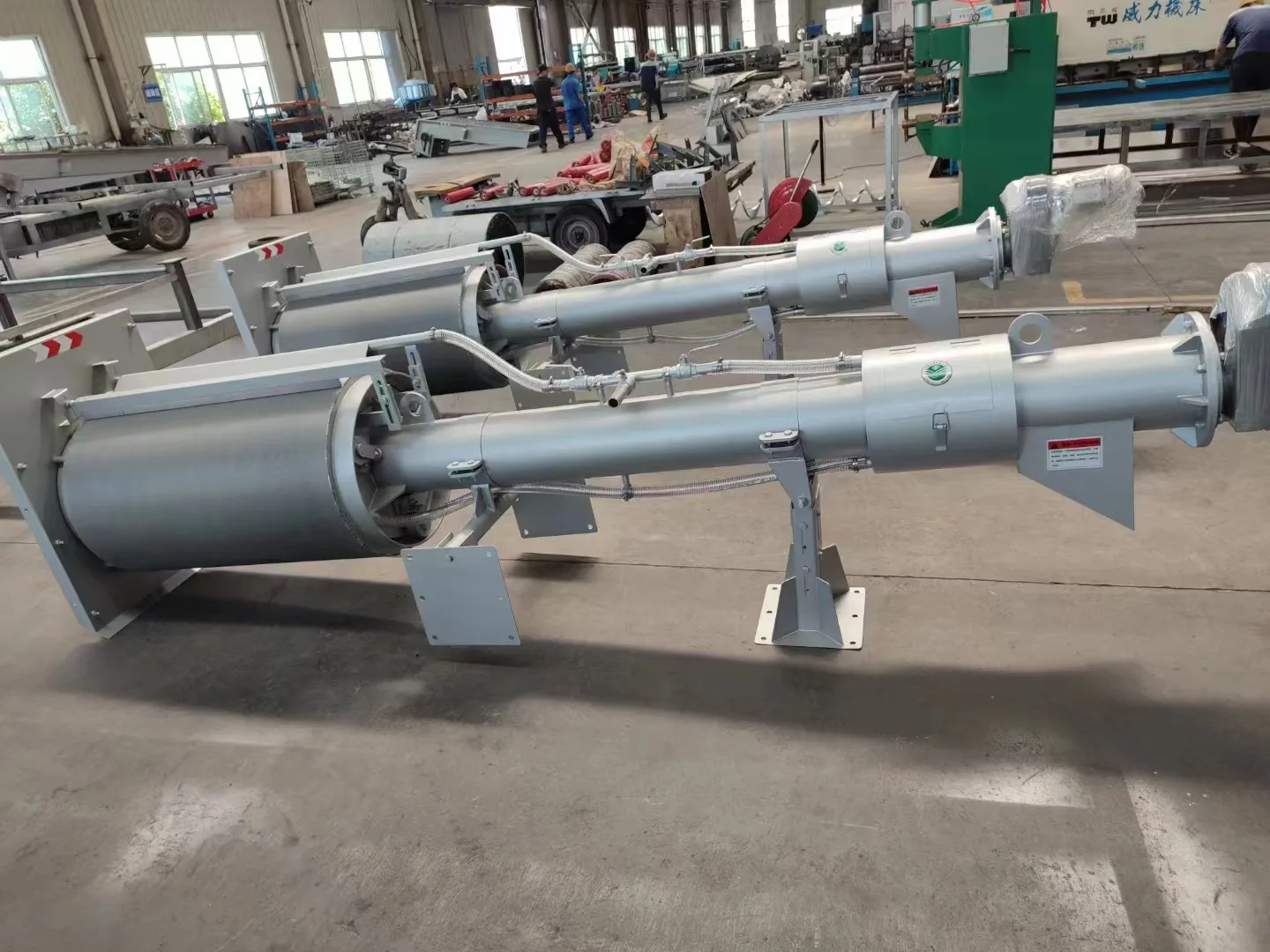
Rotary drum screen.
A perforated drum set across the channel: the flow passes through the drum surface, the material that will not pass is carried round on the drum, and a wash bar cleans it off above the water line.
What a rotary drum screen is, and what the site still does
A rotary drum screen is a perforated cylinder mounted across the inlet channel and driven slowly at one end. The flow passes through the drum surface, the material that will not pass is carried round on the drum, and above the water line a wash bar sprays it off into a collecting trough or a screw conveyor, so the apertures are cleaned on every revolution instead of blinding over. The drum takes its space in the width of the inlet rather than in its length, and the unit is assembled and tested at our factory before shipment; on site the channel and its civil works, the inlet and outlet pipework to our flanges, the wash-water supply, the power and earthing, the lifting and placement, and the screenings route away from the unit are site work.
Drum diameter, aperture and capacity are fixed by the channel and the flow
The drum spans the inlet channel, so the unit takes its space in the width of the inlet rather than in its length. Drum diameter, aperture and capacity are not a single catalogue figure: they are fixed per project from the channel width and depth, the design peak flow and the material the screen has to retain. We confirm the drum diameter, the aperture, the capacity and the wash demand from your channel survey and design flow, and our engineering issues them on the project drawing (evidence SH-RD-DRUM-01, SH-RD-CAP-01, SH-RD-APERTURE-01).
Screenings, wash water and how the material leaves the channel
The flow passes through the drum surface, and the material that will not pass is carried round on the drum. Above the water line a wash bar sprays the drum and flushes that material into a collecting trough or a screw conveyor, so the apertures are cleaned on every revolution instead of blinding over. The wash does the job a rake does on a bar screen, which is why the drum screen has no rake mechanism in the water. The wash-water demand and the discharge arrangement are fixed per project with the screenings route; the conveyor, the skip and the legal outlet are site items (evidence SH-RD-WASH-01).
Drum screen, bar screen or rotary rake: where the drum fits
A drum screen suits a small or medium inlet where a compact unit fits the inlet structure better than an inclined bar screen, and where the flow is modest enough for a drum across the channel. A rotary rake screen rakes the bars and lifts the material out on a chain, which suits a coarse or fine bar duty at a pump station or a headworks. The drum has fewer moving parts in the water because the wash does the cleaning, but it is not the answer for a very wide channel or a heavy rag load that a bar screen handles better (evidence SH-RD-BOUNDARY-01).
Materials, corrosion and the seal
The drum, the frame and the wash bar are built in stainless steel, and the grade is chosen against the water. The seal and the drive are the parts that need attention in a corrosive or abrasive duty, and the grade and the seal arrangement are confirmed per project from a water analysis. A grade that serves a municipal inlet can pit in a chloride-rich industrial flow, so the choice is not a universal rule (evidence SH-RD-MAT-01).
What is in our supply and what stays on site
In our supply sit the drum, its shaft, the drive, the wash bar, the base frame and the connections the wash needs. On site sit the channel and its civil works, the inlet and outlet pipework to our flanges, the wash-water supply, the power and earthing, the lifting and placement, and the screenings route away from the unit. The exact split is written into the commercial offer for the project (evidence SH-RD-SUPPLY-01).
Acceptance is written into the contract: factory acceptance tests before shipment, site acceptance tests after installation, and a performance test on the retention at the design flow, with the drum diameter, the aperture, the wash-water demand and the screenings discharge agreed for the project, the sampling point, the sample handling and the test method named, the party that carries a missed result named, and a failed result rectified and retested as agreed. Acceptance records are project documents; when you compare quotations, ask for the acceptance section of the contract.
The evidence basis for this page
No first-party test report for this drum on a named flow is on file, so the page publishes no capacity band and no removal rate. The drum diameter, aperture, capacity and wash demand are project values issued on the drawing. The design influent quality chart is the place to start when the feed is not characterised (evidence SH-RD-EVIDENCE-01).
The drum is one of the screening duties. Screens and filtration takes the family choice, the internal feed screen covers the inside-feed fine duty, the selection and sizing guide takes the flow and the site through the choice, and grit removal in wastewater treatment covers the grit chamber behind the screen.
Delivery
Units are assembled and tested at our factory before shipment, then shipped with export documentation. The channel width, the drum aperture and the discharge arrangement are confirmed against the site before the build. Loading arrangement and the delivery schedule are confirmed with each order against the packed dimensions and the port of discharge.