
Selecting a plant for municipal and community wastewater.
Municipal sewage is dilute compared with process wastewater, but it arrives in peaks and has to run for years with a small operator team. The plant is sized on the peak and on the standard, not on the annual average.
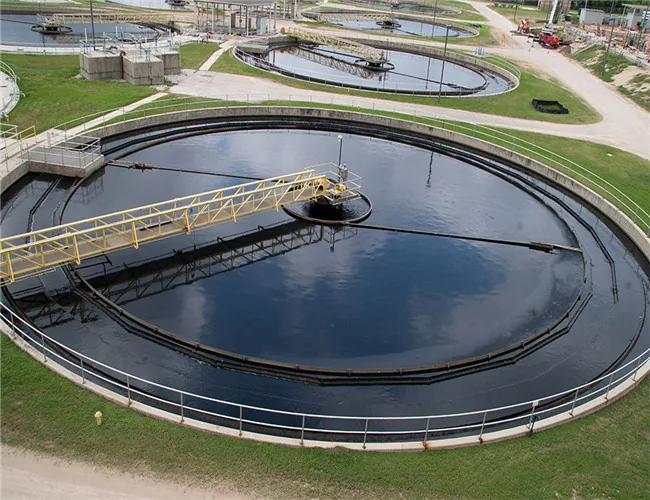
Which communities
Small towns and district systems
one town or a group of villages served by a single plant, where the flow is domestic and the discharge limit is set by the river, lake or sea that receives it.
Residential developments
housing estates and apartment compounds with a dedicated plant, where the land available and the distance to the sewer decide the configuration.
Barangays and neighbourhoods
clustered communities where a package plant has to sit close to the houses it serves, so noise, odour and footprint matter as much as treatment.
Schools, campuses and institutions
steady occupancy during term and very low flow outside it, which makes the turndown range of the plant as important as its capacity.
Island and coastal settlements
sites reached by container, run by a small team, with a discharge point that may be the sea — so the plant has to be simple to operate and simple to repair.
Industrial parks and mixed zones
domestic-strength sewage collected from many small premises, where the load arrives through a shared sewer rather than from one source that can be measured.
What makes municipal wastewater different
The strength is lower than process wastewater, but the shape of the flow and the length of the service life are what decide the design.
- Domestic strength — the organic load comes from households, so it follows the population rather than a production schedule, and the plant is usually sized from a per-capita allowance where no flow record exists.
- A pronounced diurnal peak — flow rises in the morning and again in the evening and falls at night, so the equalization tank and every stage after it are sized for the peak rather than for the daily average.
- Infiltration and inflow — groundwater and stormwater entering the sewer can multiply the flow in the wet season, and a plant sized on the dry-weather record alone will be hydraulically overloaded when it rains.
- A discharge standard set by the receiving water — a river, a lake, the sea or a reuse duty fixes the process train and the nutrient removal built into it, and the same plant may face a stricter standard a few years later.
- Sludge is the long-term operating burden — every plant produces solids that have to be thickened, dewatered and taken away, and the cost of that route is part of the operating budget.
- A small operator team — the plant runs for years after commissioning, so the configuration that is easiest to operate and repair is often worth more than the one with the lowest capital cost.
Where the plant starts
Screening and grit come out first, because everything downstream is sized on what reaches it.
- 1Screening — remove rags, plastics and coarse solids before they reach pumps or the process.
- 2Grit removal — take out sand and grit early, so it does not settle in channels, tanks or digesters.
- 3Equalization — level the diurnal peak and the wet-season flow so the biology sees a steady feed.
- 4Biological treatment — A/O, MBBR, SBR or MBR for organic and nitrogen removal, chosen on the standard and the footprint.
- 5Sludge handling — thicken and dewater the surplus solids, because the disposal route is part of the operating cost.
- 6Disinfection — where the permit requires it, a final step after the biology, selected together with the discharge point.
Selection steps
- 1Establish the flow the plant has to carry — the population or the measured record, the variation factor and the wet-season infiltration, not the annual average.
- 2Fix the process train on the standard — the discharge limit decides whether nutrient removal, filtration or disinfection has to be part of the plant.
- 3Fix the site and the build — containerized, skid-mounted or civil works, decided on footprint, delivery access and the operator arrangement.
What to send us
- Population served, or the measured dry-weather flow (m³/day).
- Whether the sewer also carries stormwater, and how much the flow rises in the wet season.
- Influent data where available — BOD₅, COD, TSS, NH₃-N, pH and temperature.
- The discharge standard and the receiving water.
- Reuse intent, if any — irrigation, landscaping or flushing.
- Site data — footprint, access for a container, and the power supply (V / Hz / phase).
- The operator arrangement — who runs the plant and how often they are on site.
- The sludge route — how the solids will be taken away from the site.
Reuse option
Where reuse is the objective, the plant can be configured to produce water for a non-potable duty. The reuse target is fixed during sizing, because it decides whether filtration and disinfection follow the biology.
Irrigation
water for on-site or nearby irrigation where reuse is permitted.
Landscaping
water for grounds and green areas around the plant.
Toilet flushing
water for flushing where the building services are designed for it.
Questions we answer on municipal projects
We have no flow record. How is the plant sized?
From the population served, a per-capita sewage allowance and the variation factor, with a separate allowance for wet-season infiltration where the sewer carries stormwater. The population-to-capacity chart on this site lists the allowances by source and keeps the residential and combined cases separate; the peaking factor chart lists the variation factor by average flow. Where a measured record exists, the record wins over the allowance.
Which peaking factor applies to a small community?
The variation factor falls as the average daily flow rises, so a small system carries a higher factor than a large one. Use the measured dry-weather record where you have it; where you do not, the factor comes from a standard table, and the table we use is listed on the peaking factor chart.
Containerized plant or civil works?
A containerized or skid-mounted plant is built and tested before it ships, needs a small footprint and can be delivered to a site with no construction team. Civil works suit a large flow, a long service life and a site where concrete and a permanent operator team are available. Footprint, delivery access, expansion plan and the operator arrangement decide between them.
What happens to the sludge?
The plant produces solids that have to be thickened and dewatered before they leave the site. The dewatering route follows the disposal route: a screw press or belt press for a steady duty, a plate-and-frame press where a drier cake is needed. The running cost of that route belongs in the operating budget, not only in the capital cost.
Can the plant produce water for reuse?
Yes, where the reuse target is fixed before sizing. Irrigation and landscaping need a lower quality than a flushing duty, and the step that reaches the target — filtration, disinfection, or membrane separation — is chosen with the target rather than added afterwards.