

On this page
In a factory video, firelight shows through the observation port in the furnace door; the camera pulls back and pipes and gas-cleaning equipment come into view behind the main furnace. A hospital engineering department receiving that video usually asks two things: has the unit we ordered already been tested, and once it is installed at the hospital, will the flue gas at the stack meet the project requirements? Those two questions have to be answered in different places, from different documents.
Follow the flue gas path and you know where to look
Bagged medical waste enters the primary chamber through the feed door. The waste burns under heat, ash stays in the furnace, and the combustion gases pass on into the secondary stage. The ≥850 °C and ≥2.0 s in the product documentation refer to the design temperature of the secondary stage and the design residence time of the flue gas in that stage. The “2 seconds” here is the time the gas spends in the high-temperature zone; a bag of waste goes through a different sequence from loading to ash.
Leaving the secondary stage, the flue gas still has to pass through gas-cleaning equipment matched to the project. Take acid gases: a dry route neutralises them with a solid sorbent, and the site has to leave access for replacing that sorbent; a wet route using a Venturi scrubber and packed tower requires the water supply, pumps and drainage to be arranged in advance. A photograph of flame in the furnace captures only the combustion step. Checking the project equipment list against the drawing is what shows which treatment equipment is connected downstream.
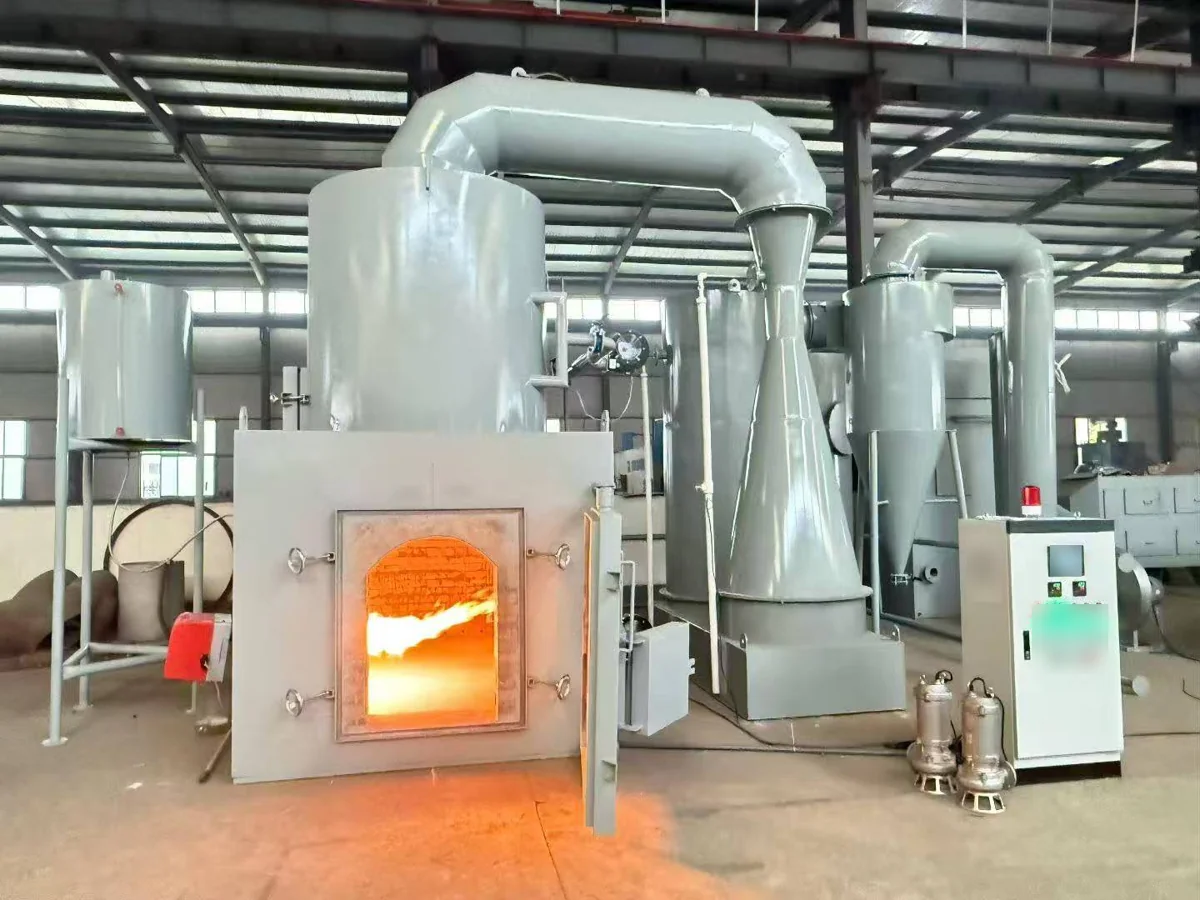
At the factory test, match the unit first, then read the report
Huayi completes unit assembly and trial running before packing, and supplies the factory test report and a pre-shipment inspection video with the shipment. When reading the report, first match the equipment model, project number or other traceable identifier against the order, then see which modules were connected during the test and which items were recorded. If the video shows a control cabinet while the quotation mentions temperature recording or a particular alarm, check the control description and the corresponding test record. The indicator lamps on the cabinet door show only the state at the moment of filming.
Take the “100 model” as an example: the rated capacity of the MWI-100 is 80–100 kg/h and that of the SMWI-100 is 100–150 kg/h. If the handover documents say only “100 model”, those three digits alone can lead to the wrong parameter table. Keeping the full model, the quotation revision and the equipment list on the same page is far more reliable than guessing unit size from a video.
Why does equipment that has been tested still need checking on arrival?
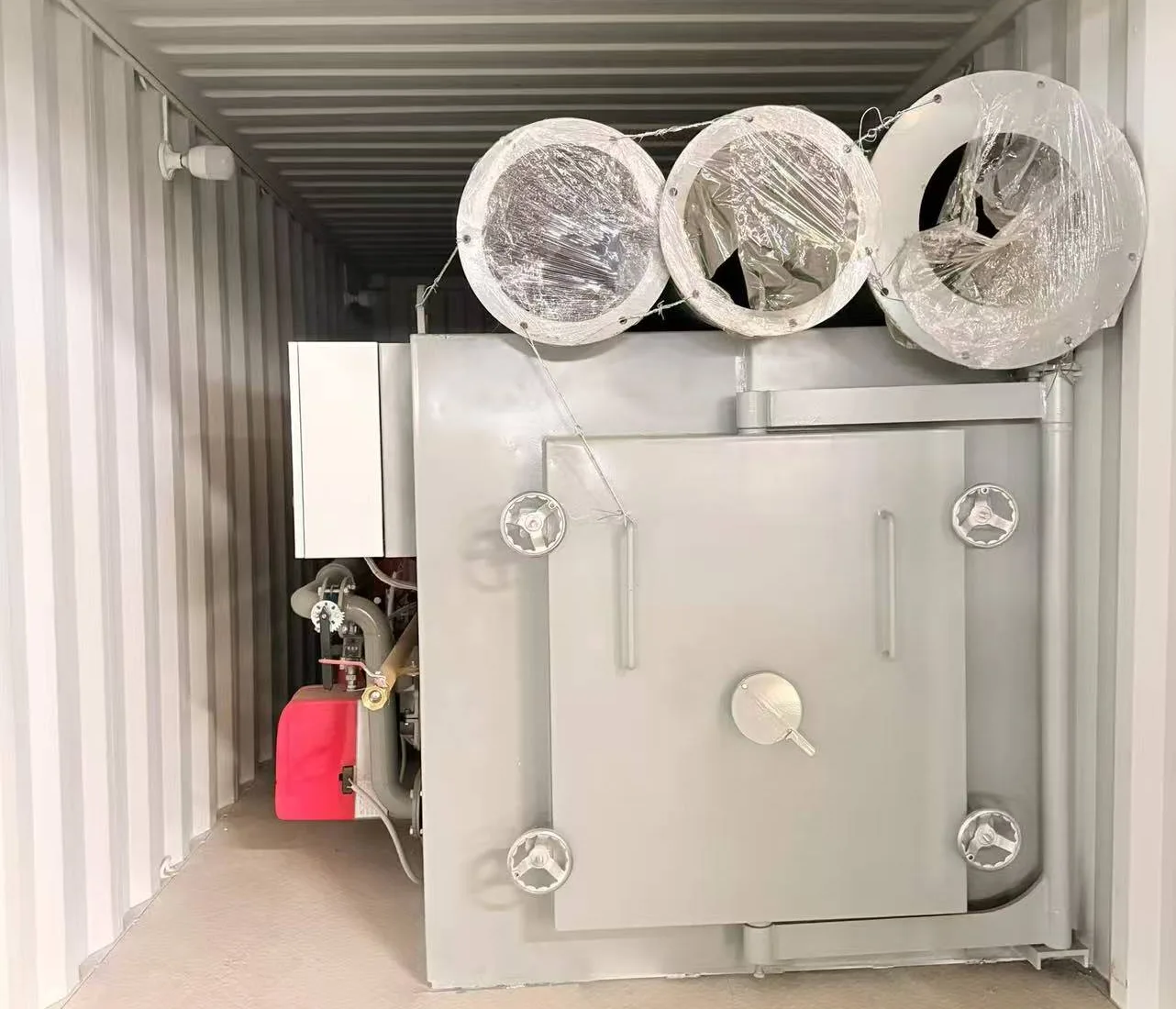
Equipment connected together during the factory burn test is split into modules and secured in containers for sea freight. On arrival, what has to be checked changes with it. First count the main furnace, gas-cleaning modules, stack sections, connections and spare parts against the packing list, then check the site interfaces against the wiring diagram and general arrangement drawing. If packaging or an interface is damaged, record the crate number and the part name and take photographs, so the factory can trace the matching packing record.
For example, if the quotation states “200 L fuel tank included”, the tank can be counted against that. Who supplies and who connects the project piping between the tank and the burner is a separate question to check in the scope of supply. In the same way, the wet scrubber tower may be on site, but commissioning can only proceed once the project site has usable water supply and drainage.
For emission results, look at the testing documents from the operating site
The factory report records the factory trial run. At the project site, the waste composition, the operating load and the gas-cleaning system as finally installed together determine the flue gas in operation. If the moisture content rises, for instance, the same mass of waste has to absorb more heat to evaporate the water. A furnace temperature reaching some value cannot by itself be used to calculate the particulate or acid gas concentration at the stack outlet.
Where a project uses emission testing as the acceptance basis, the procurement stage should agree the applicable limits, the parameters to be tested, the test conditions, and who commissions the testing and who bears the cost. The Huayi product page states that third-party emission testing is carried out on site after the equipment is put into operation, and that its cost and service scope have to be arranged separately. At handover, file the site test report and the factory report separately, so that later enquiries show which result belongs to which unit, where it was measured and what was measured.
Read the three records together
Wide table: scroll sideways to see every column.
| What you want to confirm | Which document to read first | The item most worth checking |
|---|---|---|
| Which items was the ordered unit tested on? | Factory test report and inspection video | Whether the full model, test items and records correspond |
| Which equipment arrived on site? | Project equipment list, packing list and arrival records | Whether the gas-cleaning modules, connections and spares are complete |
| How does the flue gas perform once in operation? | Third-party emission test report from the project site | Whether the test conditions, tested parameters and project acceptance conditions agree |
If you are still deciding on a model, prepare the waste types, daily throughput, planned operating hours per day and local emission requirements first, then check the equipment configuration, scope of supply and delivery documents item by item. View medical waste incinerator models and scope of supply →